Understanding Functional Units And System Boundaries In Lca

Liya Joseph
- Published on July 7, 2026
Life Cycle Assessment (LCA) is a rigorous methodology designed to evaluate the environmental impacts associated with every stage of a product, process, or service throughout its life cycle. The foundational steps of an LCA involve defining functional units and establishing system boundaries. A well-defined functional unit and clear boundaries are crucial, as they provide a solid basis for producing a comprehensive and precise LCA report.
Functional Unit (FU)
A Functional Unit (FU) is a fundamental concept in Life Cycle Assessment (LCA), defined by ISO 14040/44 as the “quantified performance of a product system for use as a reference unit.” It provides a common basis for comparing products based on their function rather than their form. It is defined using measurable aspects such as performance, duration, or service delivered. It must align with the goal and scope of the study. Functional units can also be expressed in different ways depending on what is being measured, as shown in Table 1.
| Functional unit | Purpose | Example |
|---|---|---|
| Mass based | Based on material quantity. | 1 kg of product. |
| Unit based | Based on the number of items. | 1 bottle of drink. |
| Energy based | Measures energy supplied. | 1 kWh of electricity. |
| Service based | Measures the service delivered | 1 passenger-km transported. |
| Time based | Measures performance over time. | Lighting for 10,000 hours. |
| Area based | Based on land or surface area | 1 hectare of farmland. |
| Volume based | Based on liquid or gas volume. | 1 m³ of natural gas. |
| Performance based | Measures system efficiency. | 1 kg pollutant removed. |
| Economic | Based on economic value | Impact per $1 revenue. |
| Person based | Based on human consumption or activity. | Electricity use per person per year. |
| Hybrid | Combines physical, service, or economic measures. | Crop yield per hectare per year. |
System Boundaries
System boundaries are defined under ISO 14040 and ISO 14044, which establish the internationally recognized framework for evaluating the environmental impacts of products and systems. The selection of system boundaries depends on the goal and scope of the study, as it determines which life cycle stages are included in the assessment study and which are excluded. Within these boundaries, all relevant material and energy flows are tracked, making boundary selection crucial for ensuring consistency, transparency and comparability of results. The main boundary dimensions are described in detail:
- Technological Boundary: refers to the selection of processes and technologies included in the system. It defines what is considered part of the product system (e.g., raw material extraction, manufacturing, transport, energy use) and what is excluded. For example, capital goods such as machinery, buildings, and infrastructure are often excluded in many LCAs depending on the goal and scope, while direct production processes are included.
- Geographical Boundary: defines the spatial coverage of the study and accounts for location-specific variations in environmental impacts. This is important because energy mixes, transport distances, emission factors, and regulatory conditions differ across regions. For example, producing steel in India versus Europe may result in different carbon intensities due to differences in electricity generation sources.
- Time Horizon: specifies the temporal scope of the assessment. It determines whether the study is based on historical data (retrospective LCA) or future scenarios (prospective LCA). This is particularly important for long-lived products such as buildings, where future energy use, recycling rates, or technology changes may significantly affect results.
- Nature Boundary: defines how the product system interacts with the environment, including which environmental exchanges are considered. This includes emissions to air (e.g., CO₂, NOₓ), water (e.g., effluents), and soil (e.g., solid waste or leachate). It ensures that all relevant environmental inputs and outputs are consistently accounted for in the assessment.
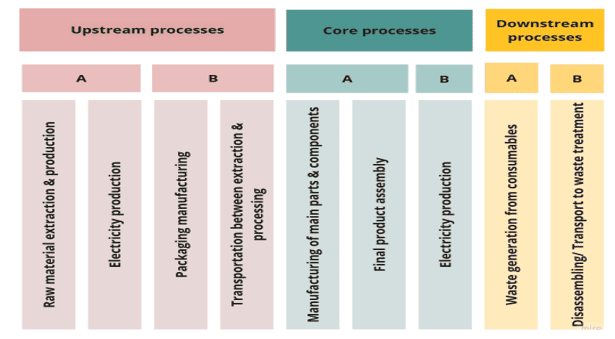
Common system boundaries are cradle-to-gate, which covers raw material extraction, transport, and manufacturing up to the factory gate (A1–A3). Cradle-to-handover extends this by adding transport to the site and installation processes (A4–A5). Cradle-to-grave includes the entire life cycle from raw material extraction through manufacturing, use, maintenance, and end-of-life treatment such as recycling or disposal (A1–C4). Cradle-to-cradle goes further by focusing on circularity, where materials are recovered at end-of-life and reused as inputs in new production cycles, reducing reliance on virgin resources and minimizing waste. The images represent system boundary diagrams for a few different systems: construction materials in Figure 1, plastics in primary manufacturing form in Figure 2, and industrial equipment in Figure 3.
Conclusion
Life Cycle Assessment is a powerful tool for evaluating environmental impacts and supporting sustainable decision-making. However, the reliability of LCA results depends heavily on clearly defined functional units and system boundaries. A well-defined functional unit ensures meaningful comparisons, while appropriate system boundaries ensure that all relevant processes are included. Together, these elements form the foundation of a robust and transparent LCA study. By carefully selecting and justifying these parameters, organizations can enhance the credibility of their assessments and make more informed, sustainability-driven decisions.
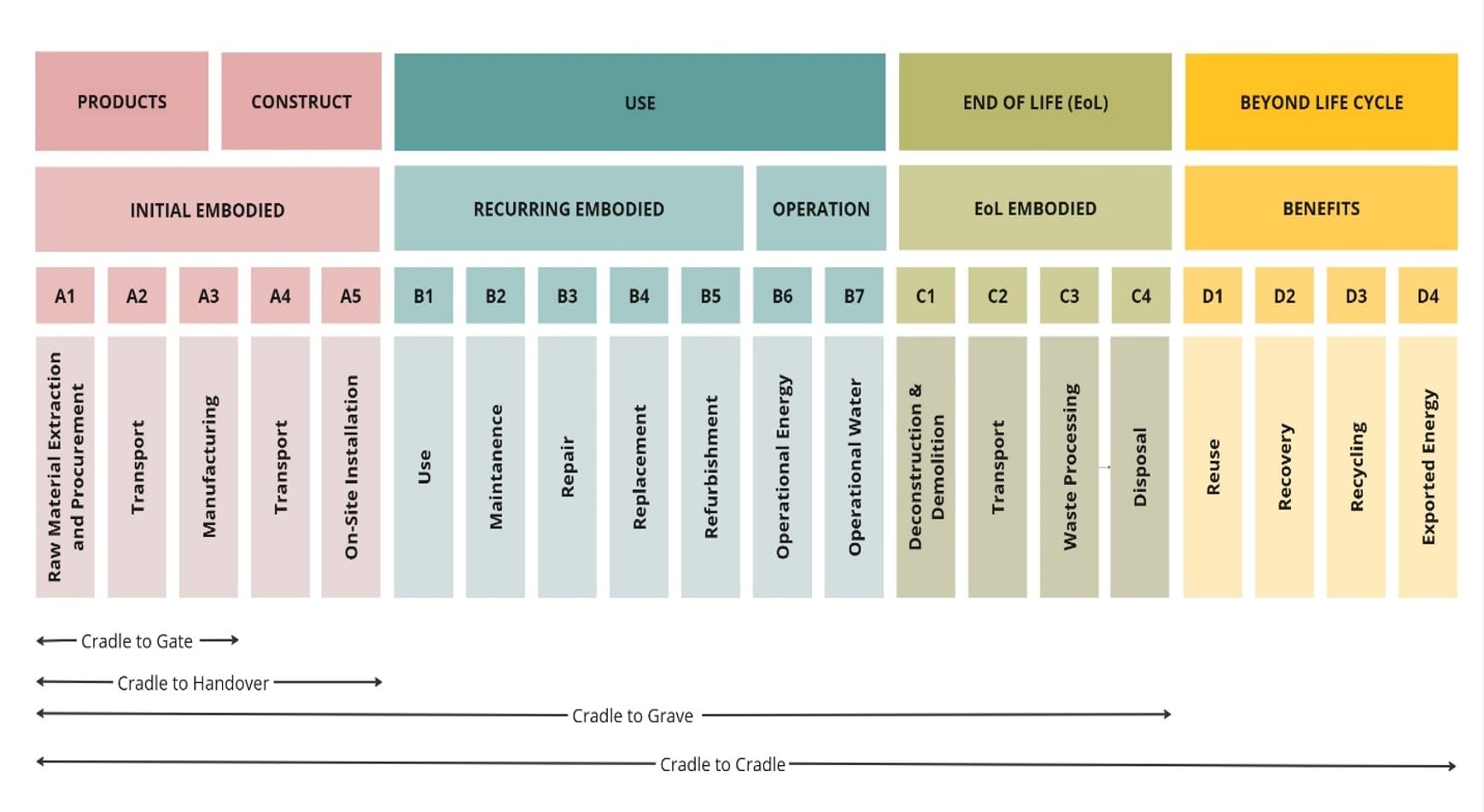
Fig 1: System boundary of construction materials
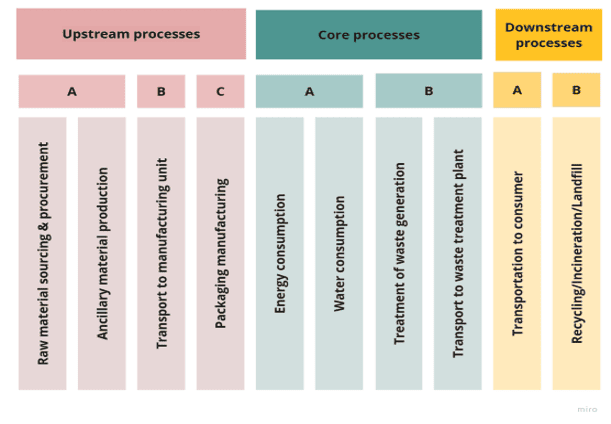
Fig 2: System boundary of plastics