System Models Used in Life Cycle Assessments (LCAs)

System Models Used in Life Cycle Assessments (LCAs)

Ameena Fazlin

What is a System Model in an LCA?

Real-world manufacturing is rarely simple. A single industrial process often creates multiple outputs at the same time—for example, a sawmill produces both timber and sawdust. When conducting a Life Cycle Assessment (LCA), practitioners need a standardized rulebook to determine exactly how much of the factory’s environmental burden belongs to the timber and how much belongs to the sawdust.

A system model is this rulebook. It provides the methodological rules for allocating environmental impacts, linking markets, and determining how burdens are assigned between products, by-products, recycled materials, and market effects.

The Three Primary System Models

To handle interconnected global supply chains, system models are defined by international LCA standards (such as ISO 14040/14044) and implemented by major life cycle inventory databases (such as ecoinvent). The choice of model depends on the goal of the study:

  1. Cut-off (Allocation, cut-off by classification): This is the most widely used “attributional” model. In an attributional LCA, the assessment strictly accounts for the historical, physical supply chain and average environmental burdens directly tied to a product. It operates on a simple philosophy: a producer is fully responsible for creating their primary product and for treating any useless waste. However, if the process generates a recyclable by-product (like scrap metal), that material is “cut off” from the original environmental burden. The next company that purchases and uses that recycled scrap starts with a clean, burden-free slate.
  2. APOS (Allocation at the point of substitution): Also an attributional model, APOS takes a different approach by focusing on shared responsibility. Instead of cutting off burdens, APOS dictates that if a process creates a useful by-product, the environmental costs of the factory should be proportionally distributed across all the valuable outputs. In this model, the environmental burden follows the material throughout its entire lifecycle.
  3. Consequential (Substitution, consequential, long-term): While Cut-off and APOS measure historical averages, the Consequential model predicts the future. It is designed to show the macroeconomic consequences of a change in demand. Instead of using average, everyday data, it looks at “marginal” suppliers. These specific facilities will actually scale up or down if the market changes. It also uses a method called substitution (rather than allocation) to calculate how generating new by-products might displace other established products on the global market.

Comparing the Core Models

The table below breaks down the most common system models used in major life cycle databases. Each model offers a distinct methodology for handling complex supply chains and shared environmental burdens.

System Model1. Cut-off2. APOS3. Consequential
Core Rule (How it works)Assumes recycled materials come "burden-free." The environmental impact of creating the original material stays with the original product; it is "cut off" at the recycling plantAllocates environmental burdens across all products, including waste and by-products. It shares the responsibility for the original manufacturing emissions.Ignores historical averages. It predicts how the global market and surrounding industries will shift to meet a new demand or policy change.
Example: Using Recycled PlasticA manufacturer uses recycled plastic for a product. They do not inherit any carbon footprint from the original virgin plastic's creation. They only account for the environmental impact of the recycling facility itself.A manufacturer uses recycled plastic. They inherit a portion of the carbon footprint from when that plastic was created as virgin material, sharing the historical burden with the first user.A company uses recycled plastic. Because they purchased it, the available market supply drops, and another company might be forced to buy virgin plastic instead. The LCA models this broader market shift.
Primary Use CaseStandard product LCAs and most corporate Environmental Product Declarations (EPDs). EN 15804-based EPDs also apply cut-off principles for modelling recycling and recovery beyond the system boundary.Academic studies where researchers want to map out shared responsibility across a material's whole life.Large-scale policy decisions, government regulations, and forecasting.

Conclusion

Choosing the correct system model is one of the most critical decisions an LCA practitioner must make. Selecting a historical model when a consequential one was needed can significantly influence the results and their interpretation. By understanding the underlying assumptions of models like Cut-off, APOS, and Consequential, organizations can ensure their environmental reporting is both accurate and perfectly aligned with their specific goals.


GHG Emissions Baselining – NHS UK (with Infosys)

GHG Emissions Baselining – National Health Service, UK (with Infosys)

Saloni Deepak Sheth

Monk Spaces worked with Infosys to develop a GHG emissions baseline for the UK’s National Health Service (NHS) supply chain. The scope covered seven key technology, consulting, and managed service vendors. The baseline is structured for annual updates.

Data Collection

The seven companies span different sectors, fiscal calendars, and reporting formats. The challenge was to create a comparable baseline despite differences in scale, geography, and disclosures. The most recent ESG or sustainability report for each company was identified and used. All data used in the baseline was publicly available and sourced from disclosures.

Emission values were transcribed from official data tables, appendices, and sustainability indices, and organised into the following categories:

  • Scope 1 – Direct emissions from owned or controlled sources.
  • Scope 2 – Indirect energy emissions, recorded as both location-based and market-based.
  • Scope 3 – All 15 value chain categories, along with work-from-home emissions.
  • Biogenic – Emissions from biogenic sources, where disclosed.

The baseline also documents each company’s carbon offset and removal portfolio, where available. It includes project types, locations, verification standards, and credit volumes.

Intensity Metrics & Attribution

Absolute emissions are not comparable across companies of different sizes and sectors. Two normalised metrics were calculated to address this.

  • Revenue-based Intensity – tCO₂e per million USD of annual revenue.
  • Employee-based Intensity – tCO₂e per full-time equivalent.

To support procurement decisions, an attribution model was built into the baseline. It estimates the NHS share of each vendor’s emissions based on revenue contribution. The baseline captures both total company emissions and the share attributable to the NHS.

Third-Party Audit

The baseline was independently audited by Sustainability and Strategy, a consultancy specialising in ESG assurance and GHG inventory verification. The audit covered data accuracy, methodology consistency, carbon credit checks, and documented assumptions.

Annual Revisions

The baseline is updated annually as vendors publish new ESG disclosures. All comparative metrics are recalculated each cycle. Over time, this creates a longitudinal dataset to track whether vendor emissions are declining, plateauing, or increasing relative to the baseline.

The baseline supports more consistent and comparable evaluation of supply chain emissions in NHS procurement.

How to Use LCA Data to Improve Supply Chain and Operational Efficiency​

How to Use LCA Data to Improve Supply Chain and Operational Efficiency

Tashit Talwar

Life Cycle Assessment (LCA) is increasingly becoming a strategic tool for companies seeking to improve operational efficiency and supply chain transparency. Traditionally, it was used mainly to quantify environmental impacts across the life cycle of products. Today, organisations are using LCA data to support decisions related to procurement, manufacturing, logistics, and product design. The method provides insight into how resources, energy use, and emissions are distributed across each stage of the value chain.

This level of visibility allows companies to identify inefficiencies that traditional accounting systems often overlook. Many operational costs and environmental impacts occur outside direct manufacturing activities, particularly within upstream supply chains. LCA helps reveal these hidden pressures by mapping impacts across raw material extraction, processing, manufacturing, and distribution stages. As sustainability expectations grow among regulators, investors, and buyers, companies are increasingly integrating LCA insights into supply chain and operational planning.

Identifying Supply Chain Hotspots

One of the most valuable applications of LCA data is identifying environmental and operational hotspots within the supply chain. Hotspots are life cycle stages where a large share of energy use, emissions, or resource consumption occurs. Understanding these areas helps organisations prioritise improvements where interventions can deliver the greatest environmental and operational benefits.

For example, an LCA conducted for aluminium beverage cans often shows that primary aluminium production contributes the largest share of the product’s carbon footprint due to electricity-intensive smelting processes. In response, companies may increase the share of recycled aluminium, which requires significantly less energy than primary production. Procurement teams may also prioritise suppliers using renewable electricity in their smelting operations. These decisions can substantially reduce product emissions while improving material efficiency and long-term supply stability(Shen & Zhang, 2024).

Strengthening Supplier Evaluation and Engagement

A large portion of environmental impacts often occurs outside a company’s direct operations, particularly within upstream supply chains. This makes supplier engagement an essential component of supply chain sustainability strategies. LCA data allows procurement teams to move beyond traditional price-based comparisons when evaluating suppliers.

Instead, companies can assess suppliers based on carbon intensity, energy efficiency, water use, and material recovery potential. Integrating environmental metrics into supplier evaluation encourages more responsible sourcing decisions. It also helps companies identify partners who invest in resource efficiency and cleaner production processes. Over time, stronger supplier collaboration can improve environmental performance and supply chain resilience. To explore how LCA and EPD data support procurement decisions, see our detailed article on LCA and EPD use in procurement.

Improving Manufacturing and Operational Efficiency

LCA insights are also valuable for improving efficiency within manufacturing operations. Many studies reveal production stages where energy use, waste generation, or material losses are disproportionately high. These findings can guide operational improvements that reduce both environmental impact and production costs (Ahmad et al., 2019).

For example, LCA results may highlight that certain material choices or production processes contribute disproportionately to emissions. In such cases, switching to alternative materials or improving production efficiency may reduce emissions and operational costs. Even small process improvements can generate meaningful reductions in emissions and operational expenses over time.

Supporting Product and Packaging Design Decisions

Product design decisions strongly influence environmental performance across the entire life cycle. LCA data provides designers with evidence-based insights into how different materials, component choices, or design configurations affect environmental outcomes. This helps companies avoid shifting environmental burdens from one stage of the life cycle to another (Rebitzer et al., 2004).

For example, reducing packaging weight may appear beneficial at first. However, if lighter packaging reduces product protection, it may increase product damage during transport. This can increase waste and transport emissions. LCA helps companies evaluate these trade-offs and select design options that deliver genuine environmental improvements.

Optimising Logistics and Distribution

Transportation and distribution often represent a significant share of total product emissions, especially in global supply chains. LCA data helps companies understand how logistics activities contribute to overall environmental impacts. With this understanding, organisations can identify opportunities to improve both environmental and operational efficiency (Toniolo et al., 2025).

Examples include route optimisation, shipment consolidation, and shifting transportation modes. Sourcing materials closer to production facilities may also reduce transport distances and associated emissions. These changes can simultaneously reduce logistics costs and carbon footprints. LCA insights, therefore, support more efficient planning across distribution networks.

Conclusion

As supply chains become more complex, companies require better data to guide operational decisions. Life Cycle Assessment provides a structured method for understanding environmental impacts across the value chain. Rather than focusing only on internal operations, organisations can evaluate how sourcing decisions, material choices, and logistics activities influence overall environmental performance.

When integrated into operational planning, LCA enables companies to move from reactive sustainability efforts to more strategic and data-driven decision-making. This approach helps align operational efficiency, cost management, and environmental responsibility within a single framework.

Resources

Ahmad, S., Wong, K. Y., & Ahmad, R. (2019). Life cycle assessment for food production and manufacturing: recent trends, global applications and future prospects. Procedia Manufacturing, 34(3), 49–57. https://doi.org/10.1016/j.promfg.2019.06.113

Rebitzer, G., Ekvall, T., Frischknecht, R., Hunkeler, D., Norris, G., Rydberg, T., Schmidt, W. P., Suh, S., Weidema, B. P., & Pennington, D. W. (2004). Life cycle assessment: Part 1: Framework, goal and scope definition, inventory analysis, and applications. Environment International, 30(5), 701–720. https://doi.org/10.1016/j.envint.2003.11.005

Shen, A., & Zhang, J. (2024). Technologies for CO2 emission reduction and low-carbon development in primary aluminum industry in China: A review. Renewable and Sustainable Energy Reviews, 189, 113965. https://doi.org/10.1016/j.rser.2023.113965

Toniolo, S., Russo, I., Ren, J., & Moktadir, M. A. (2025). Decarbonising last-mile logistics: A life cycle and just transition perspective. Sustainable Production and Consumption, 61(8), 305–322. https://doi.org/10.1016/j.spc.2025.11.006

How to Use LCA Results in Sales and Pitches

How to Use LCA Results in Sales and Pitches

Tashit Talwar

Environmental considerations increasingly influence business decisions, prompting organisations to use Life Cycle Assessment (LCA) results more strategically in sales conversations and business pitches. LCAs measure environmental impacts across a product’s life cycle and have traditionally been applied in sustainability reporting, certifications, and internal improvement efforts. In commercial settings, they help organisations respond to environmental questions and strengthen credibility among customers, investors, and partners.

In practice, the use of LCA results in sales and pitches varies depending on whether the interaction is in early-stage sales, technical evaluation, or procurement review.

  1. Building credibility without technical overload

In early sales stages, a company should communicate clearly that an LCA exists and that the product or service has undergone an environmental assessment. For example, a salesperson might say, “We have completed a third-party LCA assessment for this product. If environmental performance is part of your evaluation, we can share the details.” This approach signals seriousness and preparedness without introducing complex calculations or methodologies. For many buyers, especially those not actively seeking sustainability data, this reassurance is sufficient. The LCA works quietly in the background, supporting credibility while allowing the conversation to remain focused on product performance, pricing, and delivery. By avoiding technical explanations too early, organisations avoid introducing unnecessary complexity into the discussion.

  1. Using simple signals instead of full reports

Organisations should avoid including full LCA reports or EPDs in brochures, pitch decks, or general marketing material. However, full documentation must always remain available upon request to ensure transparency and credibility. Detailed tables and charts can be difficult to interpret and may slow down decision-making during initial interactions. Instead, companies should rely on simpler signals such as LCA or EPD logos, verified claims, or short statements derived from LCA findings. For example, a proposal might state, “This product has 18% lower embodied carbon compared to other products in the same segment.” These signals communicate that environmental checks have been completed without requiring audiences to engage with lengthy documentation. When appropriate, links or references to the full assessment can be provided, keeping the primary sales material clear and accessible.

  1. Introducing detail only when it matters

LCA results become more relevant in specific contexts where environmental performance directly influences decisions. This is particularly true in technical evaluations, institutional procurement, government-linked projects, and international markets. In these settings, verified environmental data is often expected rather than optional. Buyers may require documented impact data to satisfy internal sustainability policies, meet regulatory requirements or qualify for green building certifications. In these situations, LCAs can therefore support certification requirements, tender eligibility, or compliance expectations, sometimes determining whether a company can participate at all. Sharing detailed LCA information at this stage allows decision-makers to assess environmental performance alongside other technical and commercial criteria, which can influence the final decision.

  1. Translating LCA results into simple impact metrics.

Organisations should translate LCA findings into simple, easy-to-understand impact metrics. Examples include carbon savings per product, per order, or per project. Presenting these figures in proposals, invoices, or project summaries helps make environmental impact tangible for customers. This approach reinforces value even after a sale has been completed and allows sustainability to remain visible without requiring customers to interpret complex reports. Over time, these simple metrics can also strengthen relationships by demonstrating transparency and accountability.

  1. Supporting long-term positioning, not instant sales

While LCAs can strengthen credibility and open doors in certain markets, they do not always lead to immediate sales. In price-sensitive segments, customers may acknowledge environmental credentials without allowing them to drive purchasing decisions. For this reason, many organisations treat LCA investment as a long-term strategy rather than a short-term sales tactic. Beyond external communication, LCAs support internal learning, help identify environmental hotspots, and improve advisory capabilities. They also position organisations to respond more effectively to future regulations, procurement requirements, and rising customer expectations.

Conclusion

LCA results are most effective when introduced progressively and matched to the context and audience. When treated as a flexible communication tool rather than a static technical report, the LCA helps build trust, support informed decision-making, and prepare organisations for evolving sustainability expectations while keeping commercial conversations focused and clear.

New LEED v5 MEP Multi-Attribute Credit Using EPDs

New LEED v5 MEP Multi-Attribute Credit Using EPDs

Anuja R

LEED v5 introduces MRpc185, a new pilot credit published on 21 January 2026 for Multi‑Attribute Mechanical, Electrical, and Plumbing (MEP) Products in BD+C New Construction. This credit formally brings MEP components into LEED’s multi‑attribute product framework. MRpc185 is an extension of MRc4: Building Product Selection and Procurement. MRc4 focused on building products such as structural materials, enclosure systems, finishes, and fixtures. Many MEP components, such as ductwork, piping, and wiring, were not documented because they did not fall within MRc4 or within MRpc181, even though they contribute to embodied impacts. Over time, the MEP 2040 organisation highlighted these gaps, prompting the creation of MRpc185 to recognise and document MEP systems within LEED.

Scope

The MRpc185 credit evaluates MEP products against five criteria adopted from MRc4 as detailed below. An MEP product is considered ‘multi‑attribute’ when it demonstrates at least two of these criteria. The product’s environmental performance is documented through third‑party verified EPDs, which provide detailed life‑cycle impact data and can support multiple criteria for a single product. 

  • Climate health (mandatory criterion for each product)
  • Human health
  • Ecosystem health
  • Social health & equity, and
  • Circular economy

Eligible MEP Products

MRpc185 credit is applicable for MEP components defined as devices, apparatus, appliances, or equipment that:

  • Provide heating, ventilation, air conditioning, or other mechanical environmental control functions
  • Support facility power generation, electrical service distribution, and general power and lighting systems
  • Form part of fire suppression and electronic safety systems
  • Include piping and conduit, such as for landscape irrigation and data communications
  • Include plumbing components such as piping and pumps, but exclude plumbing fixtures

Products that are already categorised under MRc4 or MRpc181 are not eligible to contribute to MRpc185, ensuring there is no overlap with existing product categories. Within the broader MEP scope, MRpc185 identifies a set of ‘targeted’ products. These product types require EPD coverage and documentation and can be used to pursue the Option 2 credit.

Projects can earn up to 2 credits using both options reported below; project teams must specify products from at least three manufacturers, with no double-counting between Option 1 and Option 2.

Option 1 – General MEP Products (1 Point)

The project must specify and install at least 10 different MEP products. All 10 products must meet at least two criteria, including Climate Health. The examples below illustrate product-counting logic only. The MRpc185 scope requirements determine product eligibility.

  1. Ten units of the exact lighting fixture model count as one product, not ten, when assessing product counts.
  2. Ten different lighting fixture models, each with its own documentation, count as ten products, provided products from at least three manufacturers are represented overall.
  3. A combination of four lighting fixture models, three piping products, and three cable tray products together counts as ten distinct products.
  4. A single qualifying ductwork, cable tray, or piping system installed across multiple floors still counts as one product.
Option 2 – Targeted MEP Products (1 Point)

The project must specify and install at least 5 different targeted products. Each product must meet at least two criteria, including Climate Health. The targeted products are:

  • Pumps
  • Terminal units
  • Air terminals
  • Boilers
  • Heat exchangers
  • Air handling units
  • Ductwork
  • Wiring
  • Conduit
  • Generators
  • Panel boards
  • Switchboards
  • Transformers
  • Cable trays
  • Piping systems

If a project uses only Option 2, it needs 5 different targeted products.

Option 1 & 2 (2 Points)

If it uses Option 1 + Option 2, it needs:

  • 10 different general MEP products (Option 1), plus
  • 5 different targeted MEP products (Option 2), for a total of 15 different products with no double-counting.

MRpc185 marks an essential step in formally recognising the environmental impacts of MEP systems within LEED v5’s multi-attribute product framework. By extending the principles of MRc4 to include MEP components, the credit enables project teams to document embodied impacts that were previously difficult to account for. Third-party verified EPDs play a central role in demonstrating compliance across multiple criteria. At the same time, the two-option structure provides flexibility in how projects approach product selection and documentation. When applied carefully, MRpc185 allows teams to strengthen material transparency, support informed procurement decisions, and contribute meaningfully to overall LEED certification outcomes.

Product LCA & EPD – El Khayyat Bricks

Product LCA & EPD – El Khayyat Bricks

Anuja R

Across Middle East countries, clay bricks remain a cornerstone of modern construction, valued for their durability and thermal efficiency. As sustainability requirements intensify in regional building standards and procurement policies, manufacturers are increasingly adopting Environmental Product Declarations (EPDs) to communicate the environmental footprint of their products. This article highlights a company’s commitment to transparent and responsible production.

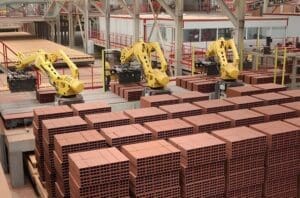
El Khayyat Red Bricks, a part of the El Khayyat Group, manufactures clay brick variants, the 29-hole shield brick and the 9-hole brick at Riyadh, Saudi Arabia.​ Monk Spaces conducted the Life Cycle Assessment (LCA) and developed EPD for El Khayyat Bricks.  

The assessment involves the following steps:

  1. PCR Identification for El Khayyat’s Brick – The first step starts with the identification of Product Category Rules, PCR 2019:14 – Construction Products under the International EPD System (IES) framework. The PCR follows the General Program Instructions (GPI) of the IES. It mandates the declaration of impact indicators (such as global warming potential (GWP), acidification potential (AP)) while specifying the mandatory life cycle modules to be included.
  2. Functional Unit and System Boundary – The LCA was conducted on a product-specific functional unit (1kg) as defined by the PCR. The system boundary for El Khayyat Bricks covered A1-A3 stages – raw material extraction & processing, ancillary materials, packaging, transport & energy consumption. It also includes end-of-life stages (C1–C4) and the module D benefits, per EN 15804+A2
  3. Primary Data Collection for Brick Manufacturing – A comprehensive data collection template was developed for the manufacturer’s convenience in line with PCR requirements. The data includes details on raw materials such as clay, red silica sand, crushed fired brick, electricity, diesel and heavy fuel oil consumption, manufacturing processes, and packaging materials.
  4. Secondary Data Collection and Data Quality – For processes occurring outside the factory, such as fuel production, electricity generation, data were sourced from the Ecoinvent environmental database, which follows EN 15941 data quality rules. These datasets were carefully selected to match the geographical location, production methods, and time period as required by the IES.
  5. Product LCA Modelling – Once the data was collected, Monk Spaces conducted the LCA assessment in compliance with ISO 14040 and ISO 14044 international standards. The evaluation was done using Karbonwise software across core environmental impact categories (as per EN15804+A2), natural resource use parameters, waste categories parameters, and output flows.​
  6. EPD Compilation using LCA Results – Following the analysis, the next step involves developing the EPD. Once the LCA results were finalised, EPD was created for El Khayyat Bricks per the ISO 14025 The LCA results and other information are compiled for the EPD.​
  7. Third-Party Verification by IES Accredited Verifier – The EPDs were verified by an accredited third-party verifier associated with the International EPD System. Modifications were made wherever required in response to the verifier’s feedback. Effective coordination with the verifier ensured comprehensive responses to all queries and the timely provision of clarifications.​
  8. Publication of EPD-IES-0026629:001 on IES Portal – After approval from the verifier, the EPDs are uploaded onto the EPD portal of the International EPD system. This contains product information, result templates, the LCA report, and the verification statement. After approval from the EPD secretariat, the EPDs were published.​

The resulting EPD (EPD-IES-0026629:001) enables El Khayyat Bricks to participate in sustainability-driven procurement, green building certifications, and carbon transparency initiatives in the construction sector. It also provides verified environmental data that can be used by architects, developers, and consultants in building-level LCAs and embodied carbon assessments.

References

CEN. (2019). Sustainability of construction works – Environmental product declarations – Core rules for the product category of construction products (EN 15804:2012+A2:2019+AC:2021). https://www.en-standard.eu/csn-en-15804-a2-sustainability-of-construction-works-environmental-product-declarations-core-rules-for-the-product-category-of-construction-products

CEN. (2024). EN 15941:2024 – Sustainability of construction works – Data quality for environmental assessment of products and construction work – Selection and use of data. https://cdn.standards.iteh.ai/samples/72391/76bd2ea8513c43ce9b6dbdc897f54208/SIST-EN-15941-2024.pdf

ISO. (2006a). Environmental management – Life cycle assessment – Principles and framework (ISO 14040:2006). https://www.iso.org/standard/37456.html

ISO. (2006b). Environmental management- Life cycle assessment – Requirements and guidelines (ISO 14044:2006). https://www.iso.org/standard/38498.html

Manteco. (2022). Environmental Product Declaration In accordance with ISO 14025. https://api.environdec.com/api/v1/EPDLibrary/Files/dec8cd5d-1106-4490-9280-08da3f2d2648/Data 

How Building LCAs Support Green Building Certifications

How Building LCAs Support Green Building Certifications

Saloni Sheth

As the construction industry moves toward sustainability, understanding the environmental footprint of buildings across their life cycle has become increasingly important. Life Cycle Assessment (LCA) provides a structured method to quantify these impacts. In response, green building rating systems such as LEED, IGBC, and GRIHA have progressively introduced LCA and embodied carbon considerations into their frameworks. While the extent of integration varies, LCAs help project teams quantify environmental impacts and, in many cases, earn points for demonstrated reductions over a building’s life cycle.

LEED

LEED v4.1: Building Life-Cycle Impact Reduction Credit

LEED v4.1 includes the “Building Life-Cycle Impact Reduction” credit (Option 2: Whole-Building Life-Cycle Assessment) for both BD+C and ID+C projects. Points are awarded for conducting a cradle-to-grave LCA of the project’s structure and enclosure and demonstrating quantified reductions compared to a baseline building. The credit awards points based on the level of demonstrated environmental impact reduction, as follows:

  • 1 Point: Conduct a whole-building LCA and report the results.
  • 2 Points: Reduce GWP by 5% and also cut two other impacts by 5%.
  • 3 Points: Reduce GWP by 10% and two other impacts by 10%.
  • 4 Points: Reduce GWP by 20% and two other impacts by 10%.
LEED v5: LCA as a Foundation for Decarbonization

Under LEED v4.1, embodied carbon reduction was encouraged through optional credits. LEED v5 represents a shift, making embodied carbon measurement a prerequisite. In the Materials and Resources category, MRp2 requires all projects to measure embodied carbon and identify their top three contributing hotspots.

BD+C (New Construction + Core and Shell)

Under BD+C, projects can earn points by reducing embodied carbon through either whole-building LCA or EPD-based analysis. New Construction projects can earn up to 6 points for achieving 10% to 40% or higher reductions in GWP. Core and Shell projects can earn up to 7 points for reductions ranging from 10% to 50% or more. Both project types may also earn additional points by tracking construction-phase emissions (Module A5).

ID+C (Commercial Interiors)

ID+C projects can earn up to 4 points by reducing the embodied carbon of interior materials through one of two approaches:

  • Select lower-carbon materials based on EPDs and earn 1–4 points depending on the level of reduction achieved, from meeting the industry average up to a 30% reduction; or
  • Conduct a full interiors LCA and earn 1–4 points by completing the assessment and demonstrating 10% to 20% or greater reductions compared to a baseline design.

IGBC

The Indian Green Building Council includes carbon and resource efficiency considerations across its building rating systems. While whole-building Life Cycle Assessment (LCA) is not a mandatory requirement within the IGBC New Buildings rating framework, specific rating systems and pathways reference quantified carbon performance that can be informed by life cycle–based assessments.

The Net Zero Carbon Rating System evaluates performance across different stages of a building’s life cycle using a 100-point rating scale. It is structured around two phases: Design and Construction, and Operations. During the Design and Construction phase:

  • Near Net Zero Carbon: Embodied carbon does not exceed 700 kgCO₂e/m² and at least 75% of operational carbon emissions are offset, earning 40 points.
  • Net Zero Carbon: The same embodied carbon limit applies, but at least 90% of operational carbon emissions are offset, earning 60 points.

GRIHA

In GRIHA v2019, Life Cycle Assessment is formally included through Criterion 20, “Reduction in Global Warming Potential (GWP) Through LCA.” This optional criterion awards up to 4 points out of 100 to projects that demonstrate a minimum 40% reduction in embodied GWP compared to a baseline building. To earn these points, project teams must conduct a whole-building LCA and demonstrate clear, quantified reductions in kgCO₂e supported by transparent calculations.

Takeaway

Across green building certifications, there is a clear shift toward greater emphasis on quantified environmental performance. LEED v5’s mandatory embodied carbon measurement, GRIHA v2019’s lifecycle-based performance criterion, and IGBC’s carbon-focused rating pathways collectively reflect a move away from prescriptive checklists toward outcome-driven assessment. As these systems evolve, building-level Life Cycle Assessment is becoming an increasingly important tool for project teams seeking credible, performance-based sustainability outcomes.


Life Cycle Assessment and ESG: Roles, Differences, and Complementarity in Sustainability Reporting

Life Cycle Assessment vs ESG: Roles, Differences, and Complementarity in Sustainability Reporting

Tashit Talwar

Sustainability increasingly influences business strategy, investment decisions, and policy development. Life Cycle Assessments (LCAs) and Environmental, Social, and Governance (ESG) frameworks are often referenced together in sustainability discussions, which has led to them being used interchangeably. In practice, this has blurred the distinction between measurement tools and reporting frameworks.

LCA is a methodological tool used to measure environmental impacts. At the same time, ESG is a framework used to evaluate broader corporate performance across environmental, social, and governance dimensions. Confusion arises because both are applied to sustainability decision-making, even though they serve different purposes and operate at various organisational levels (Varbanov et al., 2024)

To clarify these distinctions, the table below compares how LCA and ESG differ across key dimensions such as purpose, scope, system boundaries, and use cases.

AspectLCAESG
PurposeMeasures the environmental impacts of a product, material, building, or process.Evaluates an organisation's overall sustainability across environmental, social, and governance dimensions.
Type of ToolScientific, standardised, quantitative assessmentStandardised reporting and governance frameworks using qualitative and quantitative indicators
ScopeEnvironmental impactEnvironmental, social and governance impacts
System BoundariesUses defined system boundaries (cradle-to-gate or cradle-to-grave), which cover life-cycle modules, A1-A3 (upstream), A4-A5 (core/construction), B1-B7 (use phase), and C1-C4 (end-of-life stage).Uses organisational reporting boundaries based on Scope 1 (direct), Scope 2 (energy), and Scope 3 (value-chain) emissions.
Emission CategoriesGlobal Warming Potential (GWP), Acidification Potential (AP), Eutrophication Potential (EP), Ozone Depletion Potential (ODP), and other environmental impact categoriesGreenhouse gas (GHG) emissions, typically reported as Scope 1, Scope 2, and Scope 3
Standards usedISO 14040, ISO 14044 (ISO, 2006a, 2006b)GRI, ISSB/SASB, TCFD/TNFD, BRSR (BRSR, 2024; GRI, 2021; IFRS, 2022; SASB, 2022; TCFD, 2021; TNFD, 2025)
Use CasesMaterial selection, product comparison, eco-design, hotspot analysis, and investor communication.Investor communication, risk assessment, compliance, and strategy building.
How LCAs strengthen ESG reporting

Most ESG frameworks require organisations to disclose product-related impacts and value-chain emissions, but do not prescribe detailed calculation methodologies. Reporting boundaries also vary depending on the chosen ESG standard. LCAs help address this gap by providing a standardised, science-based method for quantifying environmental impacts across a product’s or building’s life cycle.

LCA directly strengthens the Environmental (E) pillar of ESG reporting by providing quantified data that can be mapped to commonly used disclosure standards. The alignment with GRI 302 (Energy) and GRI 305 (Emissions) illustrates this relationship.

  • GRI 302 (Energy) – Scope 1 and Scope 2: LCAs help quantify energy consumption across manufacturing or construction processes, including on-site fuel use associated with Scope 1 and purchased electricity or heat associated with Scope 2. For example, the LCA of a product can show how much energy is used to produce one unit of the product, which can then be directly reported under the GRI 302 standard of the Global Reporting Initiative.
  • GRI 305 (Emissions) – Scope 1, Scope 2 and Scope 3: LCA quantifies greenhouse gas emissions across cradle-to-gate or cradle-to-grave life-cycle stages, making it particularly valuable for estimating Scope 3 emissions. For example, an LCA can calculate the carbon emissions from raw material extraction to end-of-life stages, enabling consistent reporting of Scope 3 emissions under the GRI 305 standard, alongside Scope 1 and Scope 2 (Kasperzak et al., 2023).

When appropriately scoped and transparently reported, LCAs support environmental claims with scientifically grounded data and recognised standards, reducing the risk of unsubstantiated or misleading sustainability claims (De Salles, 2025).

In essence, LCA and ESG are complementary approaches to sustainable business transformation rather than competing instruments. While ESG offers the strategic framework for accountability, reporting, and decision-making, LCA provides the scientific foundation, including data, measurements, and impact assessments. When combined, they enable a shift from high-level sustainability commitments to quantifiable and verifiable environmental performance. By integrating life cycle assessment (LCA) into ESG disclosures, companies can strengthen credibility, better manage environmental risks, and align corporate goals with stakeholder expectations and international sustainability requirements.

Resources

Ana Claudia Nioac De Salles, & Peter Brantsch. (2025). How Life Cycle Assessment Supports Sustainability Reporting: Example from Clean Aviation. Engineering Proceedings 2025, Vol. 90, Page 56, 90(1), 56. https://doi.org/10.3390/ENGPROC2025090056

BRSR. (2024). Sustainability & Business Responsibility & Sustainability Reporting(BRSR) Background Material on Sustainability and Business Responsibility and Sustainability Reporting (BRSR) (Revised Edition 2024).

GRI. (2021). GRI – Universal Standards. https://www.globalreporting.org/standards/standards-development/universal-standards/

IFRS. (2022). IFRS – ISSB communicates plans to build on SASB’s industry-based Standards and leverage SASB’s industry-based approach to standards development. https://www.ifrs.org/news-and-events/news/2022/03/issb-communicates-plans-to-build-on-sasbs-industry-based-standards/

ISO. (2006a). ISO 14040:2006 – Environmental management — Life cycle assessment — Principles and framework. ISO. https://www.iso.org/standard/37456.html

ISO. (2006b). ISO 14044:2006 – Environmental management — Life cycle assessment — Requirements and guidelines. ISO. https://www.iso.org/standard/38498.html

Kasperzak, R., Kureljusic, M., Reisch, L., & Thies, S. (2023). Accounting for Carbon Emissions—Current State of Sustainability Reporting Practice under the GHG Protocol. Sustainability 2023, Vol. 15, Page 994, 15(2), 994. https://doi.org/10.3390/SU15020994

SASB. (2022, February 4). ESG Integration Insights – 2021 Edition – SASB. SASB. https://sasb.ifrs.org/knowledge-hub/esg-integration-insights-2021-edition/

TNFD. (2025, May). Taskforce on Nature-related Financial Disclosures (TNFD) Recommendations – TNFD. TNFD. https://tnfd.global/publication/recommendations-of-the-taskforce-on-nature-related-financial-disclosures/

TCFD. (2021). Task Force on Climate-related Financial Disclosures Implementing the Recommendations of the Task Force on Climate-related Financial Disclosures Implementing the Recommendations of the Task Force on Climate-related Financial Disclosures i.

Varbanov, P. S., Zeng, M., Van Fan, Y., Wang, X., Peng Ngan, S., Lin Ngan, S., & Loong Lam, H. (2024). Chemical Engineering Transactions: A Holistic Approach to Sustainability Reporting: Integrating Social and Governance Dimensions in Life Cycle Assessment. https://doi.org/10.3303/CET24114009

How Life Cycle Assessments Can Win Over Investors in the Sustainability Space

How LCAs Can Win Over Investors in the Sustainability Space

Tashit Talwar

Environmental sustainability reporting is now a core expectation for long-term business success. As sustainability becomes a key investment criterion, investors are increasingly scrutinising environmental claims and are wary of greenwashing practices that overstate actual performance. A PwC survey found that 9 out of 10 investors believe companies frequently report unsupported sustainability claims (PwC, 2023). This scrutiny has increased demand for credible and verifiable evidence of environmental impact rather than broad or unsubstantiated disclosures.

Sustainable investment funds continue to grow, with assets under management increasing by 11.5% to nearly USD 3.92 trillion in the first half of 2025 (Morgan Stanley, 2025). This growth reflects a rising investor preference for companies with transparent and credible environmental disclosures. Sustainability-linked financial products have followed a similar trend, with green bond issuances exceeding USD 1 trillion in 2024, a 3% increase compared to 2023 (IFC, 2025).  

As capital increasingly flows into sustainability-linked instruments, the credibility and measurability of environmental information become critical. For sectors such as construction, waste management, and carbon capture, life cycle assessments (LCAs) provide a practical response to this requirement. LCAs offer a structured and standardised method for quantifying environmental impacts across a product’s or building’s life cycle. When applied appropriately, they help identify risks, uncover efficiency opportunities, and support improved access to capital. Several LCA benefits are particularly relevant to investor decision-making.

  • Provides transparency through verified information: LCAs are based on international standards, such as the ISO 14040 and 14044 standards, giving investors confidence in the accuracy of reported impacts. For example, these standards require companies to disclose assumptions, data sources, and allocation methods. This allows investors to assess the robustness of the results and reduce the risk of selective or misleading reporting (ISO, 2006b, 2006a).
  • Highlighting hotspots that affect profitability: By revealing high-impact areas, LCAs guide targeted improvement that strengthens both sustainability performance and cost efficiency. For example, an LCA might show that manufacturing a product uses a lot of energy, so changing the process can reduce emissions and costs. For investors, these are signs of better margin resilience and lower long-term risk.
  • Creates decision-ready disclosures and supports regulatory alignment: LCAs generate clear and standardised environmental data that can be easily used in ESG reporting, including Scope 3 disclosures and formats such as CDP and GRI (Varbanov et al., 2024). This same data preparedness also helps companies respond to emerging regulations such as the EU Carbon Adjustment Mechanism (CBAM), which requires exporters to report product-level carbon emissions. Companies that already use LCA are better prepared to calculate, document, and disclose these emissions, reducing compliance risk and signalling regulatory readiness to investors. (Read about the difference between LCA and ESG here.)
  • Supports scale-up plants: LCAs show how environmental impacts change when moving from pilot to commercial scale, helping avoid costly mistakes. For example, a pilot plant making a small number of products often uses more energy per unit, while large factories can be more energy efficient. At the same time, scaling up may require sourcing materials from farther locations, increasing transport emissions. An LCA helps identify these changes early, allowing companies to design more efficient plants and supply chains before large investments are made.
  • Enhances comparability across competitors: As LCAs follow certain boundaries and standards, this helps investors in making fair comparisons between companies and products in the same sector. For example, two building material suppliers can be benchmarked using their LCA-derived carbon footprint (GWP-total).
  • Supports access to international markets: LCAs help startups and MSMEs, especially in the construction material sector, to enter regulated markets, especially in regions like the EU, UK, Australia, etc. For example, a startup manufacturing insulation panels must provide an LCA to sell its products in the EU market. Companies that already have verified LCAs are seen as export-ready, reducing the compliance risk and making them more attractive to foreign investors.
LCAs provide a clear link between environmental performance and financial decision-making in a market where investors demand transparency and verifiable results. By embedding LCA findings into strategic planning, ESG disclosures, and investor communications, companies move beyond high-level sustainability claims and demonstrate measurable progress. This strengthens investor confidence, attracts long-term capital, and positions companies as credible participants in the transition toward a low-carbon economy.
 
Resources
  • International Finance Corporation. (2025, June 5). Emerging Market Green Bonds 2024. https://www.ifc.org/en/insights-reports/2025/emerging-market-green-bonds-2024
  • ISO. (2006a). ISO 14040:2006 – Environmental management — Life cycle assessment — Principles and framework. ISO. https://www.iso.org/standard/37456.html
  • ISO. (2006b). ISO 14044:2006 – Environmental management — Life cycle assessment — Requirements and guidelines. ISO. https://www.iso.org/standard/38498.html
  • Morgan Stanley. (2025, September 8). Sustainable Investing Funds Beating Traditional Funds in 2025 | Morgan Stanley. https://www.morganstanley.com/insights/articles/sustainable-funds-outperform-traditional-first-half-2025?utm_source=chatgpt.com
  • PwC. (2023, November 5). PwC 2023 Global Investor Survey | PwC. https://www.pwc.com/gx/en/news-room/press-releases/2023/pwc-2023-global-investor-survey.html?utm_source=chatgpt.com
  • Subal, L., Braunschweig, A., & Hellweg, S. (2024). The relevance of life cycle assessment to decision-making in companies and public authorities. Journal of Cleaner Production, 435, 140520. https://doi.org/10.1016/J.JCLEPRO.2023.140520
  • Varbanov, P. S., Zeng, M., Van Fan, Y., Wang, X., Peng Ngan, S., Lin Ngan, S., & Loong Lam, H. (2024). A Holistic Approach to Sustainability Reporting: Integrating Social and Governance Dimensions in Life Cycle Assessment. Chemical Engineering Transactions, 114, 49–54. https://doi.org/10.3303/CET24114009

Biodiversity Stress Assessment in Life Cycle Assessments for Buildings

Biodiversity Stress Assessment in Life Cycle Assessments for Buildings

Anuja R

Biodiversity loss, defined as the decline in the variety and abundance of species within ecosystems, is increasingly recognised as a material environmental risk. The construction sector plays a substantial role in this decline, accounting for nearly one-third of global biodiversity loss (WALCC, 2024). As sustainability standards and disclosure expectations evolve, quantifying biodiversity impacts is becoming a necessary component of building life cycle assessments (LCAs).

Biodiversity assessment within LCA

Biodiversity assessment within an LCA evaluates how environmental pressures across a product’s life cycle affect ecosystems and species. Rather than being conducted as a separate study, it forms a focused component within the broader LCA framework, using biodiversity-specific indicators to quantify ecosystem stress. These indicators capture multiple impact categories that influence habitat quality and species survival. In building LCAs, biodiversity-related metrics are typically reported using the ReCiPe 2016 impact assessment method (Mark A. J., 2017).

Key biodiversity-related impact categories commonly reported in building LCAs include:

  • Acidification: terrestrial (PDF·m²·yr) – Emissions of sulfur dioxide and nitrogen oxides from construction materials manufacturing contribute to soil and water acidification, degrading sensitive terrestrial ecosystems.
  • Climate change: freshwater and terrestrial ecosystems (PDF·m³·yr/ PDF·m²·yr) – Greenhouse gas emissions from cement and fuel-intensive processes alter temperatures and precipitation patterns, stressing species adapted to local conditions.
  • Ecotoxicity: freshwater, marine, terrestrial (PDF·m³·yr for freshwater / PDF·m²·yr for terrestrial) – Releases of heavy metals and chemicals from upstream manufacturing processes and site activities contaminate ecosystems, reducing species abundance across terrestrial and aquatic environments.
  • Eutrophication: freshwater, marine (PDF·m³·yr) – Nutrient runoff from sites and upstream processes depletes oxygen in aquatic systems, harming biodiversity.
  • Land use and transformation (PDF·m²·yr) – Land occupation and conversion of forest or grassland for construction result in habitat loss and reductions in species populations.
  • Photochemical oxidant formation in terrestrial ecosystems (PDF·m²·yr) – Air pollutants contribute to ground-level ozone, damaging vegetation and reducing plant biodiversity.
  • Water use: aquatic and terrestrial ecosystems (PDF·m³·yr or PDF·m²·yr) – Excessive freshwater withdrawal or diversion alters hydrological balance and stresses dependent flora and fauna.

Understanding the metrics

Biodiversity stress indicators in LCA are commonly expressed using the Potentially Disappeared Fraction (PDF) metric. PDF represents the proportion of species potentially lost over a defined area and time period as a result of cumulative environmental pressures. For example, a result of 100 PDF·m²·yr may indicate the equivalent of complete species loss over a 100 m² terrestrial area for one year under the assessed conditions. These results are intended for comparative assessment across design options or products, rather than as direct predictions of observed species loss (Goedkoop et al., 2023).

Conclusion

Assessing biodiversity stress is increasingly recognised as a best-practice element in sustainable construction. Standards and frameworks such as EN 15804+A2, ISO 14044, and SBTN for Nature are progressively elevating biodiversity as a relevant impact category. Integrating biodiversity stress assessment into LCAs enables construction projects to move beyond a narrow focus on carbon and address ecological quality and resilience more holistically.

By embedding biodiversity evaluation within product development, building certification processes, and Environmental Product Declarations (EPDs), the construction industry can better align environmental performance claims with ecosystem protection and long-term ecological stability.

References

Goedkoop, M., Rossberg, A. G., & Dumont, M. (2023). Bridging the Gap Between Biodiversity Footprint Metrics and Biodiversity State Indicator Metrics. https://www.qmul.ac.uk/sbbs/media/sbbs/research/bsc-project/QMUL-

Mark A. J. (2017). ReCiPe2016: a harmonised life cycle impact assessment method at midpoint and endpoint level. The International Journal of Life Cycle Assessment, 22(2), 138–147. https://doi.org/10.1007/s11367-016-1246-y

WALCC. (2024). Up to one-third of biodiversity loss is due to construction. World Alliance for Low Carbon Cities. https://www.walcc.org/nsdc/up-to-one-third-of-the-biodiversity-loss-is-due-to-construction/